Birkett Lane
Birkett Lane grassland stewardship project
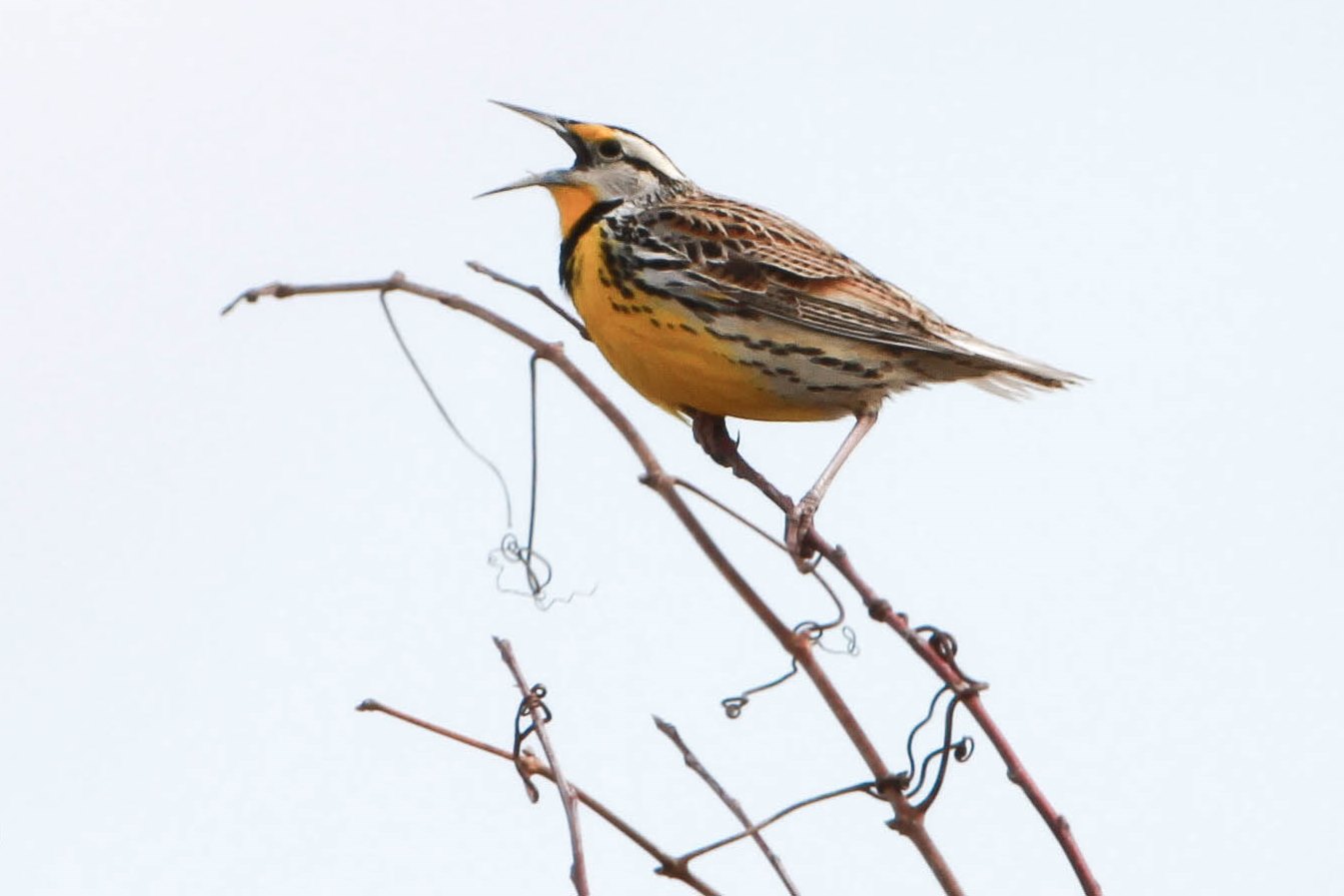
We have partnered with the City of Brantford to convert our property near Birkett Lane into native grassland, because this is suitable habitat for the threatened eastern meadowlark.
Eastern meadowlarks are medium-sized yellow and brown song birds that live in large grasslands. They are at risk of becoming an endangered species, due to habitat loss.
This project will also provide habitat for other grassland birds, such as clay-coloured sparrows, savannah sparrows, eastern bluebirds and bobolinks.
The partnership allows for a 20-year grassland stewardship project, starting in late 2017.
Stewardship practices you may notice on this property
- Invasive tree and shrub removal
- Prescribed burns
- Native grass and wildflower seeding
- Vegetation mowing
- Annual vegetation monitoring
- Annual grassland bird monitoring
- Installation of interpretive signs
You can learn more about these practices on the Grasslands stewardship page.
Spring prescribed burns
Every few years, the Grand River Conservation Authority conducts a prescribed burn at the Birkett Lane property. Burns usually occur in the month of April. The exact date is not known as it must take place when weather conditions allow.
Prescribed burns follow Ontario Ministry of Natural Resources guidelines to ensure safety and effectiveness. Natural firebreaks are created to protect adjacent properties and contain the burn within GRCA land. City of Brantford government, nearby property owners, the fire department, police, and ambulance services are notified. The fire department is notified of the exact time of the prescribed burn, once it is known. Signs are posted at the site on the day of the burn, and the public is reminded to obey all signage in the area and follow directions of on-site staff. Fire and smoke may be visible for up to four hours and will be easily seen from the surrounding area.
At this location, the goal of prescribed burns is to reduce native woody plants and non-native grasses, so that the proportion of native grasses will increase. Native species can tolerate fire, so burning the land clears out non-native species. Fire also releases important nutrients into the soil, which promotes growth and increases seed yields of native wildflowers and grasses.
Please contact GRCA’s Natural Heritage Specialist for more information.